
NASA Dryden Flight Research Center
Solar air preheating for an aircraft hangar with ventilation and pressure-control requirements.
Edwards, California, United States · Historical documented installation
← Global projects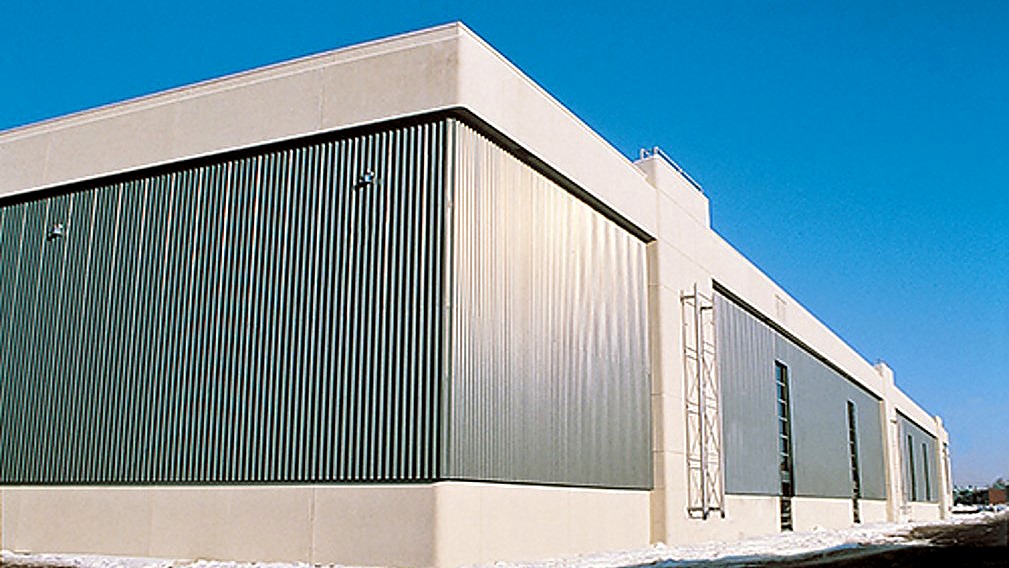
Engineering the right source of useful heat.
A site-specific installation or documented project scope, with design versus reported outcomes clearly separated.
The challenge
Aircraft hangars require substantial replacement air and reliable environmental conditions. The Dryden site also needed to address unwanted negative pressure in spaces adjacent to operations.
The solution
The published Conserval project case describes a south-facing bronze-coloured SolarWall façade on Building 1623, connected to the incoming ventilation air supply. The integration preheated fresh air while supporting ventilation and building pressure management.
Published outcomes
Conserval published a historical projected saving of approximately USD 15,000 per year using 2002 natural gas prices. This is a historical projection, not an independently verified modern operating figure.
Integration details.
South-facing façade collector integrated into an aircraft hangar
Ventilation air preheating with connected air handling
Negative-pressure mitigation and indoor air quality considered
Could a similar approach work at your plant?
Assess air requirements, collector location, thermal demand, installation constraints and fuel displacement using your facility data.
Request a feasibility assessment ↗