
Philip Morris Torbalı
Solar air preheating integrated with controlled rooftop waste-heat recovery for tobacco drying.
İzmir, Türkiye · 2024 published project
← Global projects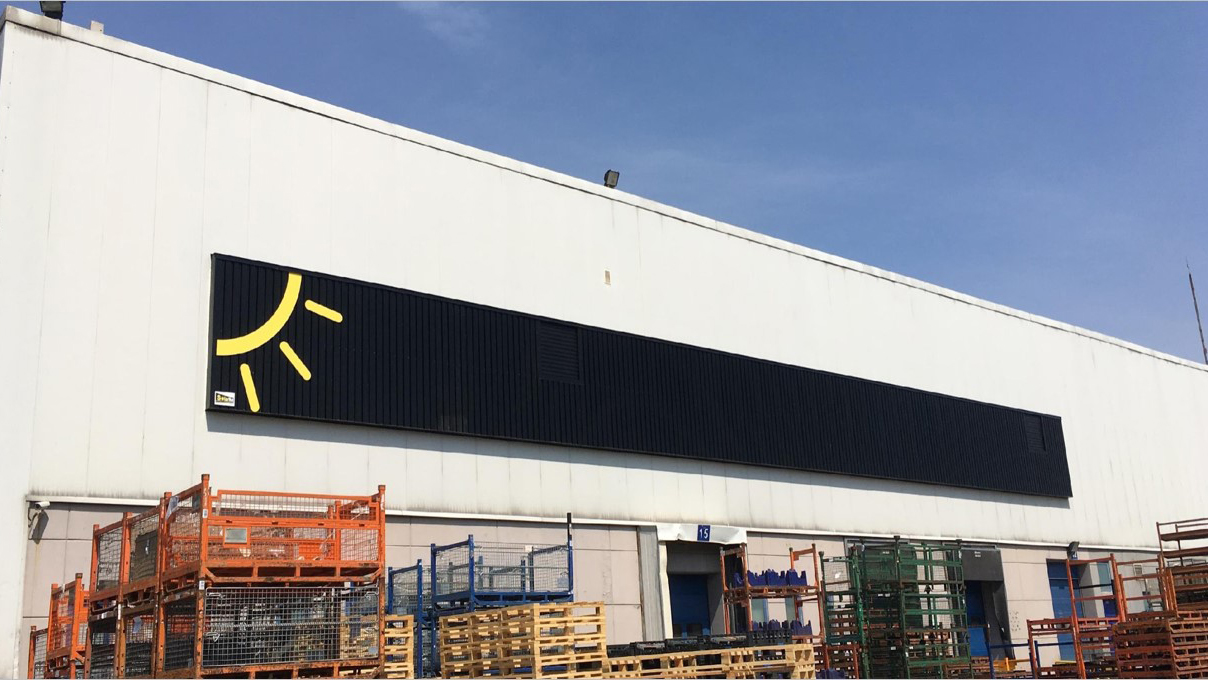
Engineering the right source of useful heat.
A site-specific installation or documented project scope, with design versus reported outcomes clearly separated.
The challenge
Tobacco drying depends on stable air temperature and substantial fresh air. Conventional heating meets the balance when incoming air temperature is low.
The solution
The SolarWall Türkiye published project describes a transpired solar façade heating 5,000 m³/h of fresh air to the AHU. When solar contribution is insufficient, a controlled blend uses recoverable heat from roof air to support the required temperature.
Published outcomes
SolarWall Türkiye reports 265,000 kWh annual thermal energy, approximately 24,906 standard m³ of natural-gas-equivalent savings and 54.3 tonnes of avoided CO₂ per year. These are the publisher’s project numbers and not independently re-verified here.
Integration details.
5,000 m³/h process-related air supply
Approximate 25°C controlled setpoint described in the published project
Solar heat combined with roof waste-heat blending
Proportional air handling and control integration
Could a similar approach work at your plant?
Assess air requirements, collector location, thermal demand, installation constraints and fuel displacement using your facility data.
Request a feasibility assessment ↗